Car Maintenance Schedule: Routine vehicle maintenance isn’t just about following a checklist—it’s about understanding which services prevent expensive breakdowns, which ones you’re overpaying for, and how to budget realistically for the true cost of car ownership. The automotive industry has changed dramatically over the past decade with synthetic oils extending change intervals from 3,000 to 10,000+ miles, computerized systems requiring different diagnostics, and electric vehicles eliminating entire maintenance categories. Yet many drivers still follow outdated advice from quick-lube chains that profit from unnecessary frequent service, while others skip critical maintenance that leads to $3,000-10,000 repair bills and roadside breakdowns requiring expensive towing. This comprehensive guide breaks down exactly what your vehicle needs at each mileage interval, what it actually costs in 2026, which services are worth paying professionals versus tackling yourself, and how proper maintenance prevents the kind of catastrophic failures that leave you stranded and scrambling for emergency roadside assistance.
Quick Answer: The average vehicle costs $800-900 per year for routine maintenance and unexpected repairs combined, or roughly $66-75 per month. However, this varies dramatically based on vehicle age (newer cars: $500-700/year, older cars 10+ years: $1,200-1,500/year), driving conditions (severe duty requires 50% more frequent service), and whether you follow manufacturer schedules or outdated quick-lube recommendations. Oil changes now cost $35-125 depending on conventional versus synthetic oil, with modern vehicles safely going 5,000-10,000 miles between changes—not the obsolete 3,000-mile myth that wastes American drivers an estimated $2 billion annually. Proper preventive maintenance prevents 70-80% of major breakdowns, eliminating thousands in repair costs and roadside emergency towing fees.
Table of Contents
For emergency roadside assistance if maintenance issues cause breakdowns, see our roadside service cost guide.
The Maintenance Cost Reality Check: What You’re Actually Spending
2026 Annual Maintenance Costs by Vehicle Age
Brand New to 3 Years Old:
Typical annual costs: $500-700
Breakdown:
- Oil changes (2-3 per year): $100-375
- Tire rotations (2-3 per year): $40-150
- Multipoint inspections: $150-250
- Wiper blades: $20-45
- Cabin air filter: $25-60
- Unexpected repairs: Minimal (warranty coverage)

Reality: New cars are cheapest to maintain
- Still under warranty (3-5 years typical)
- Parts haven't worn out yet
- Modern engineering = better reliability
- Manufacturer often includes free maintenance

Monthly budget recommendation: $40-60/month
4-6 Years Old (Post-Warranty):
Typical annual costs: $800-1,100
Breakdown:
- Oil changes: $100-375
- Tire rotations: $40-150
- Brake pads (first replacement): $200-600
- Battery replacement (if needed): $100-300
- Air filters: $45-100
- Spark plugs (around 60K miles): $200-600
- Multipoint inspections: $150-250
- Unexpected repairs: $200-500

Reality: This is when real maintenance starts
- Warranty expired
- First major service intervals hit (60K miles)
- Brake pads wearing out
- Battery reaching end of life

Monthly budget recommendation: $65-90/month
7-10 Years Old:
Typical annual costs: $1,000-1,500
Breakdown:
- Oil changes: $100-375
- Tire rotations: $40-150
- Brake service (more frequent): $400-800
- Tires (replacement needed): $400-1,200
- Coolant flush: $100-150
- Transmission service: $150-250
- Suspension components: $200-600
- Timing belt (if equipped): $400-900
- Unexpected repairs: $500-1,000

Reality: Higher mileage = more frequent service
- Major systems need attention
- Rubber components deteriorating
- Fluids degrading faster
- More things breaking

Monthly budget recommendation: $85-125/month
10+ Years Old:
Typical annual costs: $1,200-2,000+
Breakdown:
- All routine maintenance above
- More frequent brake service: $500-1,000
- Exhaust system repairs: $200-1,500
- Electrical issues: $200-800
- Engine/transmission concerns: $500-3,000
- Rust/corrosion issues: Variable
- Unexpected failures: $800-2,000

Reality: Decisions about repair vs. replace
- Maintenance costs approaching car payment
- Higher risk of breakdown
- Parts harder to find
- May not be worth fixing

Monthly budget recommendation: $100-170/month
OR: Consider whether to replace vehicle
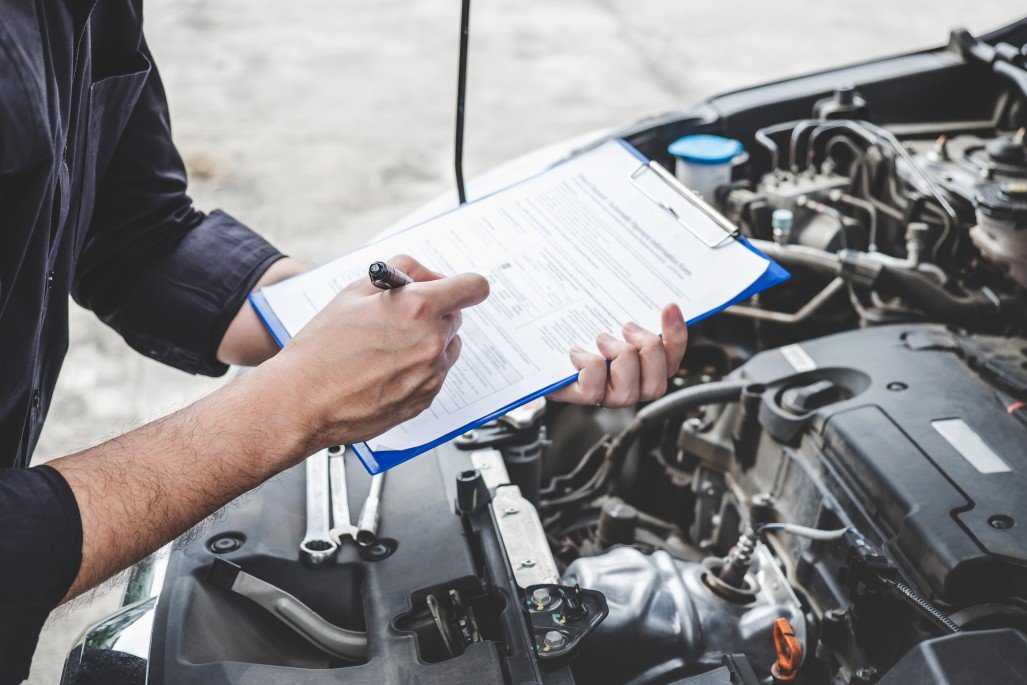
Cost Comparison: Manufacturer Schedule vs. Quick-Lube Recommendations
Following Manufacturer Schedule (Recommended):
Example: 2022 Toyota Camry, 60,000 miles over 5 years

Year 1 (12,000 miles):
- Oil change @ 7,500 miles: $75 (synthetic)
- Tire rotation with oil change: Included
- Multipoint inspection: $0 (free with oil)
Total: $75

Year 2 (24,000 miles):
- Oil change @ 15,000 miles: $75
- Oil change @ 22,500 miles: $75
- Cabin air filter @ 20,000: $40
Total: $190

Year 3 (36,000 miles):
- Oil changes (2): $150
- Brake inspection: $0 (with oil change)
- Engine air filter @ 30,000: $45
Total: $195

Year 4 (48,000 miles):
- Oil changes (2): $150
- Cabin air filter: $40
Total: $190

Year 5 (60,000 miles):
- Oil changes (2): $150
- Major service @ 60K miles: $500
  (coolant, brake fluid, power steering, inspection)
Total: $650

5-Year Total: $1,300
Annual Average: $260/year
Following Quick-Lube “Every 3,000 Miles” Advice:
Same vehicle, same 60,000 miles

Every year (4 oil changes instead of 1-2):
- Year 1: 4 changes × $75 = $300
- Year 2: 4 changes × $75 = $300
- Year 3: 4 changes × $75 = $300
- Year 4: 4 changes × $75 = $300
- Year 5: 4 changes × $75 = $300
Plus same other services: $775

5-Year Total: $2,275
Annual Average: $455/year

WASTED MONEY: $975 over 5 years ($195/year)
The math is clear: Following outdated 3,000-mile advice costs you an extra $195 per year with zero benefit.
For manufacturer-recommended schedules, always consult your owner’s manual or check the glove box maintenance guide.
Debunking the 3,000-Mile Oil Change Myth
The History of This Expensive Lie
Where it came from:
- 1960s-1970s: Engines used conventional mineral oil
- Primitive filtration: Oil degraded quickly
- Different metallurgy: Engines wore faster
- Lack of computer controls: Ran less efficiently
- No synthetic oil: Only conventional available
Reality in 1970: 3,000-mile changes were necessary
Why it persists in 2026:
- Quick-lube business model: Built around frequent service
- Profit motive: More changes = more revenue
- Marketing inertia: “That’s what we’ve always done”
- Consumer ignorance: Many don’t read owner’s manual
- Sticker shock prevention: “$50 every 3 months” sounds better than “$125 every 10 months”
Who benefits from the myth:
- Quick-lube chains (Jiffy Lube, Valvoline, etc.)
- Oil companies (selling more oil)
- Filter manufacturers (selling more filters)
Who loses:
- You (wasting $150-250/year per vehicle)
- Environment (unnecessary oil waste)
What Modern Vehicles Actually Need
2020-2026 Vehicle Recommendations by Manufacturer:
Honda (Civic, Accord, CR-V, Pilot):
- Synthetic oil: 7,500-10,000 miles
- Maintenance Minder system: Follow indicator
- Real-world: Most drivers get 8,000-9,000 miles
Toyota/Lexus (Camry, RAV4, Highlander, RX):
- Synthetic oil: 7,500-10,000 miles
- Oil life monitor: Follow dashboard indicator
- Real-world: 7,500-9,000 miles typical
Ford (F-150, Explorer, Mustang, Escape):
- Synthetic blend/full synthetic: 7,500-10,000 miles
- Intelligent Oil-Life Monitor: Adjust for conditions
- Real-world: 7,500-8,500 miles common
GM (Silverado, Equinox, Tahoe, Suburban):
- Dexos synthetic: 7,500-10,000 miles
- Oil Life System: Monitors driving conditions
- Real-world: 7,000-9,000 miles
Stellantis/Chrysler (Ram, Jeep, Dodge):
- Synthetic: 8,000-10,000 miles
- Oil change indicator: System monitors usage
- Real-world: 7,500-9,000 miles
BMW/Mercedes/Audi (luxury European):
- Full synthetic required: 10,000-15,000 miles
- Condition-based service: Computer determines intervals
- Real-world: 10,000-12,000 miles
Hyundai/Kia:
- Synthetic: 7,500-10,000 miles
- Maintenance reminder: Dashboard indicator
- Real-world: 7,500-8,000 miles
Nissan/Infiniti:
- Synthetic: 7,500-10,000 miles
- Maintenance interval: Follow schedule
- Real-world: 7,500-9,000 miles
Understanding “Normal” vs. “Severe” Duty
Most drivers think they’re “normal duty” but 75% actually qualify as “severe.”
Severe duty conditions (shorten intervals 30-50%):
1. Short trips (under 5 miles) in cold weather:
- Engine doesn’t reach full operating temperature (212°F)
- Oil can’t evaporate moisture contamination
- Fuel dilution occurs
- Acidic buildup, sludge formation
- Solution: Follow severe duty schedule
2. Frequent idling or stop-and-go traffic:
- Engine running but not moving = harder on oil
- Urban commuters qualify
- Delivery drivers especially
- Solution: Change oil at lower end of range (every 5,000-6,000 miles)
3. Dusty conditions or unpaved roads:
- Air filter clogs faster
- Dirt infiltration into engine
- Construction sites, rural areas
- Solution: Check air filter every 3,000 miles, change oil more often
4. Towing or hauling heavy loads:
- Engine works harder
- Higher temperatures
- Transmission stress
- Solution: Follow severe duty schedule, consider transmission cooler
5. Extreme temperatures (hot or cold):
- Below 0°F or above 90°F regularly
- Oil degrades faster
- More engine stress
- Solution: Synthetic oil (handles extremes better), more frequent changes
6. Mountainous or hilly terrain:
- Constant acceleration/deceleration
- Higher engine load
- Solution: Follow severe duty recommendations
Do you qualify for any of these? Then follow severe duty schedule (30-50% more frequent service).
Example:
Normal duty recommendation: Every 10,000 miles
Your situation: Daily 3-mile commute in Minnesota winter (short trips + cold)
What you actually need: Every 5,000-6,000 miles (severe duty)

Ignoring this = sludge buildup = $1,500-3,000 engine cleaning or replacement
For breakdown prevention through proper maintenance, see our emergency preparedness guide.
Complete Maintenance Schedule by Mileage
Every 5,000-7,500 Miles (or 6 Months)
Oil and Filter Change: $35-125
Conventional oil:
- Cost: $35-75
- Lifespan: 3,000-5,000 miles
- Best for: Older vehicles (pre-2010), high-mileage engines
- Note: Most modern vehicles specify synthetic
Synthetic blend:
- Cost: $50-90
- Lifespan: 5,000-7,500 miles
- Best for: Moderate-use vehicles, budget-conscious owners
- Note: Middle ground between conventional and full synthetic
Full synthetic:
- Cost: $65-125
- Lifespan: 7,500-15,000 miles depending on brand
- Best for: Modern engines (most 2015+ vehicles require it)
- Benefits: Better protection, longer intervals, extreme temperature performance
DIY cost: $25-50 (oil + filter, no labor) Time investment: 30-45 minutes if you do it yourself
What happens if you skip it:
Immediate (0-1,000 miles overdue):
- Nothing noticeable
- Oil still lubricating

Moderate (1,000-3,000 miles overdue):
- Oil turning dark/dirty
- Slightly reduced efficiency
- Minimal engine wear

Severe (3,000-5,000+ miles overdue):
- Oil breaking down, losing viscosity
- Sludge formation begins
- Increased engine wear
- Fuel economy drops 1-2 MPG

Extreme (10,000+ miles overdue):
- Severe sludge buildup
- Oil passages clogging
- Engine damage occurring
- Risk of seized engine: $3,000-10,000 repair
Tire Rotation: $20-50 (often free with oil change)
What it does:
- Evens out tire wear (front tires wear differently than rear)
- Extends tire life 25-50%
- Improves handling and safety
- Prevents uneven tread (which causes noise, poor traction)
Recommended interval: Every 5,000-7,500 miles
Cost avoidance:
Tires without rotation: 30,000-40,000 miles lifespan
Tires with regular rotation: 50,000-70,000 miles lifespan

Example (SUV with $200/tire × 4 = $800 set):
Without rotation: Replace every 35,000 miles = $2,285 per 100K miles
With rotation: Replace every 60,000 miles = $1,333 per 100K miles
Savings: $952 over 100,000 miles

Rotation cost over 100K: $200-400 (13-14 rotations)
Net savings: $552-752
DIY: Possible with jack, jack stands, lug wrench (45-60 minutes)
Multipoint Inspection: $0-250 (often free with service)
What’s included:
- Fluid levels (all reservoirs)
- Brake pad/rotor thickness
- Tire tread depth, pressure
- Suspension components (visual)
- Belts and hoses (visual)
- Battery voltage test
- Light function check
- Wiper condition
Value: Catches problems early before they become expensive
Examples of what inspections catch:
- Brake pads at 2mm (replace now for $300 vs. later with damaged rotors for $600-800)
- Battery at 11.8V (replace soon before dead battery leaves you stranded)
- Tire at 3/32″ tread (plan for replacement vs. surprise blowout on highway)
- Oil leak beginning (fix $200 gasket vs. $1,500 engine damage later)
Every 15,000-30,000 Miles
Engine Air Filter Replacement: $35-80
What it does:
- Filters dirt/debris before entering engine
- Ensures proper air/fuel mixture
- Improves fuel economy when clean
- Protects engine internals
Lifespan:
- Normal conditions: 15,000-30,000 miles
- Dusty conditions: 10,000-15,000 miles
- Visual check: If dirty/clogged, replace regardless of mileage
Conventional wisdom: Every 12 months or 12,000 miles Reality: Check every oil change, replace when dirty
Cost of delaying:
Dirty air filter effects:
- Reduced fuel economy: 1-3 MPG loss
- Less power/acceleration
- Harder engine start
- Increased emissions

At $3.50/gallon and 15,000 miles/year @ 25 MPG:
Clean filter: 600 gallons/year = $2,100
Dirty filter (22 MPG): 682 gallons/year = $2,387
Cost of not replacing $45 filter: $287/year in wasted gas
DIY difficulty: EASY (5-10 minutes, no tools usually) DIY cost: $15-30 for OEM filter at auto parts store
Cabin Air Filter Replacement: $25-100
What it does:
- Filters air entering passenger compartment
- Removes pollen, dust, pollution
- Improves HVAC efficiency
- Reduces allergens
Lifespan: 15,000-25,000 miles (or 12 months)
Signs you need replacement:
- Reduced airflow from vents
- Musty odor when AC/heat runs
- More dust on dashboard
- Allergies worse in car
Professional cost: $45-100 (includes labor) DIY cost: $15-30 (filter only) DIY difficulty: EASY (10-20 minutes, often just clips)
Fuel Filter Replacement: $50-200
What it does:
- Filters contaminants from fuel
- Protects fuel injectors ($300-600 each to replace)
- Ensures proper fuel pressure
- Modern vehicles: Often in-tank, longer life
Older vehicles (pre-2010): External filter, replace every 25,000-30,000 miles Newer vehicles (2010+): In-tank filter, replace every 60,000-100,000 miles or never (lifetime filter)
Signs of clogged fuel filter:
- Engine hesitation/stumbling
- Hard starting
- Loss of power under load
- Stalling at idle
Cost of ignoring:
- Damaged fuel pump: $300-800
- Ruined injectors: $300-600 each × 4-8 = $1,200-4,800
- Stranded on roadside: $95-200 tow
For emergency fuel delivery if fuel system fails, see our roadside service costs.
Every 30,000-50,000 Miles
Brake Pad Replacement: $200-600 per axle
Lifespan varies dramatically:
- Highway driving: 70,000-80,000 miles
- City/urban driving: 30,000-50,000 miles
- Aggressive driving: 25,000-35,000 miles
- Hybrid vehicles (regenerative braking): 60,000-100,000 miles
Front vs. rear:
- Front pads: Wear 2-3x faster (60-70% of braking force)
- Rear pads: Last longer
- Replace when: Pad thickness <3mm or squealing
Cost breakdown:
DIY (parts only):
- Brake pads: $40-80 per axle
- Time: 1-2 hours per axle
- Skill: Moderate

Professional:
- Pads only: $200-400 per axle
- Pads + rotors: $400-800 per axle
- All four wheels: $800-1,600 complete

What's included (professional):
- New pads installed
- Rotors resurfaced (if possible) or replaced
- Brake fluid inspection
- Caliper lubrication
- Test drive
Cost of waiting too long:
Worn pads (2mm thickness):
- Repair: Replace pads only = $200-400/axle

Worn pads (0mm = metal-on-metal):
- Damage: Scored/damaged rotors (can't resurface)
- Repair: New pads + new rotors = $400-800/axle
- Additional cost: $200-400 because you waited

Extremely worn (grinding for weeks):
- Damage: Rotors destroyed, caliper damaged
- Repair: Pads + rotors + calipers = $600-1,200/axle
- Additional cost: $400-800 because you ignored it
Warning signs (inspect immediately):
- Squealing/squeaking when braking
- Grinding noise (metal-on-metal = TOO LATE)
- Pulsing brake pedal
- Longer stopping distance
- Brake warning light
Battery Replacement: $100-300
Lifespan:
- Average: 3-5 years
- Hot climates (Texas, Arizona, Florida): 3-4 years
- Cold climates (Minnesota, Maine, Montana): 3-4 years
- Moderate climates: 4-6 years
Signs of failing battery:
- Slow engine crank
- Dimming lights
- Electrical issues
- Battery warning light
- Age (over 4 years = test annually)
Cost comparison:
DIY battery:
- Parts store (Duralast, DieHard): $100-180
- Premium (Optima, Interstate): $150-300
- Installation: Free at many parts stores
- Time: 10-15 minutes

Dealership battery:
- OEM battery: $200-300
- Installation included
- Warranty: Usually longer

Roadside emergency battery:
- Dead battery + mobile service: $200-350
- Includes: New battery delivered + installed
- Premium: Convenience (but expensive)
Cost of ignoring dying battery:
- Dead battery at home: Jump-start $95-125, or free if neighbor helps
- Dead battery at work/store: Jump-start $95-125
- Dead battery on highway: Tow to shop $95-200, jump-start $95-125
- Alternator damage (from weak battery): $300-700
Pro tip: Free battery testing at AutoZone, O’Reilly, Advance Auto
Spark Plug Replacement: $200-600
Lifespan varies by plug type:
Conventional copper plugs:
- Lifespan: 30,000 miles
- Cost: $10-20 each
- Vehicles: Older models (pre-2005)

Platinum plugs:
- Lifespan: 60,000 miles
- Cost: $20-40 each
- Vehicles: Common in 2005-2015 models

Iridium plugs:
- Lifespan: 100,000-120,000 miles
- Cost: $30-60 each
- Vehicles: Most 2015+ vehicles

Note: Most modern vehicles have iridium plugs
Professional replacement cost:
4-cylinder engine:
- Labor: $80-150
- Parts (4 plugs): $80-240
- Total: $160-390

6-cylinder engine:
- Labor: $120-200
- Parts (6 plugs): $120-360
- Total: $240-560

8-cylinder engine:
- Labor: $150-300 (harder to access)
- Parts (8 plugs): $160-480
- Total: $310-780
Signs you need new plugs:
- Hard starting
- Rough idle
- Engine misfire
- Reduced fuel economy (2-4 MPG loss)
- Check engine light (misfire codes)
- Loss of power/acceleration
Cost of delaying:
- Catalytic converter damage: $800-2,500
- Ignition coil failure: $150-400 per coil
- Fuel economy loss: $200-400/year in extra gas
Every 60,000 Miles (Major Service)
This is the big one—the 60,000-mile service is where multiple systems need attention simultaneously.
Total cost: $500-1,500 depending on vehicle and what’s included
What’s typically included:
1. Coolant Flush: $100-150
- Drain old coolant (degrades over time)
- Flush cooling system
- Refill with fresh coolant
- Prevents: Overheating, corrosion, water pump failure
2. Transmission Fluid Service: $150-300
- Drain and fill: $150-200 (partial fluid exchange)
- Complete flush: $200-300 (full fluid replacement)
- Filter replacement (if accessible): $50-100 extra
- Prevents: Transmission failure ($2,500-6,000 repair)
3. Brake Fluid Flush: $80-150
- Brake fluid absorbs moisture over time
- Reduces boiling point (dangerous)
- Causes internal corrosion
- Should be changed every 2-3 years
4. Power Steering Fluid: $80-150
- Drain and refill
- Prevents pump wear
- Maintains smooth steering
5. Differential Fluid (AWD/4WD vehicles): $80-150
- Often overlooked
- Critical for AWD systems
- Prevents expensive diff failure
6. Timing Belt (if equipped): $400-900
- Not all vehicles have timing belts
- Many modern vehicles use timing chains (don’t need replacement)
- If you have a timing belt: CRITICAL to replace on schedule
- Failure = catastrophic engine damage ($3,000-8,000)
Vehicles with timing belts that MUST be replaced:
- Honda: Many 4-cylinder engines (check your model)
- Toyota: Some models (Camry 4-cyl, older RAV4)
- Subaru: Most models
- Hyundai/Kia: Many models
Timing belt replacement includes:
- Belt itself
- Water pump (recommended to replace simultaneously)
- Tensioners
- Seals
- Labor (engine-intensive job)
Vehicles with timing chains (no replacement needed):
- Most Ford vehicles
- GM vehicles
- Many Toyota V6 engines
- BMW, Mercedes (chains, not belts)
Cost of skipping 60K service:
Scenario 1: Coolant not changed
- Corrosion builds up over years
- Water pump fails: $300-600
- Radiator rusts out: $300-800
- Engine overheats on highway: $95-200 tow + potential head gasket damage $1,500-3,000

Scenario 2: Transmission fluid never changed
- Fluid degrades, loses lubricity
- Internal clutches wear faster
- Solenoids fail
- Complete transmission failure at 120K miles: $2,500-6,000
- Could have prevented: $300 service at 60K + 120K = $600 total

Scenario 3: Timing belt not replaced
- Belt snaps at 75,000 miles while highway driving
- Valves hit pistons (interference engine)
- Catastrophic engine damage
- Repair: $3,000-8,000 or engine replacement
- Plus: Tow from highway: $150-300
- Total: $3,150-8,300 vs. $600-900 preventive replacement
For towing costs if timing belt snaps on highway, see our towing cost guide.
Every 100,000+ Miles
At this mileage, you’re into “major components” territory:
Suspension Components: $200-1,500
- Shocks/struts: $400-1,200 (all four corners)
- Control arm bushings: $200-600
- Ball joints: $150-400 per side
- Sway bar links: $100-300
Exhaust System: $200-2,000
- Catalytic converter: $800-2,500 (expensive due to precious metals)
- Muffler: $150-400
- Exhaust pipes: $100-500
- O2 sensors: $150-300 each
Major Engine Components:
- Water pump: $300-700
- Alternator: $300-700
- Starter: $250-600
- Serpentine belt: $80-150
At 100K+, expect to budget $1,500-2,500/year for maintenance and repairs.
DIY vs. Professional: What Should You Tackle Yourself?
EASY DIY (Save 50-70% on labor)
Wiper Blade Replacement:
- Professional: $25-50 (parts + labor)
- DIY: $10-30 (parts only)
- Difficulty: 1/10 (literally 2 minutes, no tools)
- Savings: $15-20
Cabin Air Filter:
- Professional: $45-100
- DIY: $15-30
- Difficulty: 2/10 (5-15 minutes, usually just clips)
- Savings: $30-70
Engine Air Filter:
- Professional: $35-80
- DIY: $15-30
- Difficulty: 2/10 (5-10 minutes, usually screws or clips)
- Savings: $20-50
Battery Replacement:
- Professional: $150-300 (parts + labor)
- DIY: $100-180 (parts), installation free at parts store
- Difficulty: 3/10 (15 minutes, wrench required)
- Savings: $50-120
Light Bulb Replacement (most vehicles):
- Professional: $30-80 per bulb
- DIY: $10-30 per bulb
- Difficulty: 3/10 (varies by vehicle)
- Savings: $20-50 per bulb
MODERATE DIY (Requires Some Skill)
Oil Changes:
- Professional: $35-125
- DIY: $25-50 (oil + filter)
- Difficulty: 4/10 (30-45 minutes, jack/ramps required)
- Savings: $10-75
- Note: Only worth DIY if you enjoy it or change oil frequently
Brake Pad Replacement:
- Professional: $200-400 per axle
- DIY: $40-120 (pads only, rotors extra if needed)
- Difficulty: 6/10 (1-2 hours, jack/tools required, moderate skill)
- Savings: $160-280 per axle
- Caution: Safety-critical system, be confident or pay professional
Spark Plug Replacement (4-cylinder):
- Professional: $160-390
- DIY: $60-160 (plugs + supplies)
- Difficulty: 5/10 (1-2 hours, requires proper tools, care with torque)
- Savings: $100-230
LEAVE TO PROFESSIONALS
Timing Belt Replacement:
- Complexity: 9/10 (engine disassembly required)
- Consequence of error: Catastrophic engine damage
- Savings not worth risk
Transmission Service:
- Complexity: 7/10 (requires special equipment for full flush)
- DIY drain-and-fill: Possible but incomplete
- Professional flush: More thorough
Suspension Work:
- Complexity: 8/10 (alignment required after, special tools)
- Safety: Critical to handling/safety
- Recommendation: Leave to pros
Electrical Diagnostics:
- Complexity: 8/10 (requires scan tools, wiring knowledge)
- Guessing costs more than paying pro to diagnose correctly
Brake Fluid Flush:
- Complexity: 6/10 (requires bleeding entire system)
- Safety: Critical system, air in lines = brake failure
- Recommendation: Pay for professional service
How Proper Maintenance Prevents Expensive Breakdowns and Towing
Real Scenarios: Maintenance Skipped = Expensive Consequences
Scenario 1: Oil Changes Ignored
The setup:
Vehicle: 2019 Honda Accord, 65,000 miles
Recommended: Oil change every 7,500 miles (synthetic)
Actual: Owner goes 18,000 miles without change
Reason: "Too busy, car seems fine"
What happens:
Miles 0-10,000: Oil dark but still functioning
Miles 10,000-15,000: Oil breaking down, sludge forming
Miles 15,000-18,000: Severe sludge, oil passages clogging
Mile 18,500: Engine seizes on I-95 during commute
The cost:
What preventive maintenance would have cost:
- Two oil changes: $150 total

What actually happened:
- Engine seized (complete internal failure)
- Tow from highway: $150
- Engine diagnosis: $150
- Engine replacement: $4,500
- Rental car (10 days): $500
- Total: $5,300

Additional cost of neglect: $5,150
ROI of maintenance: 3,433%
Scenario 2: Brake Pads Ignored
The setup:
Vehicle: 2018 Ford F-150
Warning: Squealing brakes for 3 months
Owner response: "I'll get to it eventually"
Miles driven with worn pads: 8,000 additional miles
What happens:
Initial squealing: Wear indicators touching rotors (pads 2mm)
3 weeks later: Squealing worse (pads 1mm)
Month 2: Grinding noise starts (metal-on-metal)
Month 3: Pulsing brake pedal, longer stopping distance
Emergency: Brake pedal goes to floor on rainy highway, near-collision
The cost:
If addressed at first squealing:
- Front brake pads: $300
- Time in shop: 1.5 hours

What actually happened:
- Front pads destroyed: $80
- Front rotors destroyed (need replacement): $200
- Calipers damaged: $400
- Brake fluid contaminated: $100
- Rear brakes (worn from overcompensation): $350
- Labor for everything: $300
- Total: $1,430

Additional cost of procrastination: $1,130
Plus: Nearly caused collision (priceless)
Scenario 3: Timing Belt Not Replaced
The setup:
Vehicle: 2015 Subaru Outback
Manufacturer recommendation: Replace timing belt at 105,000 miles
Actual mileage: 127,000 miles (22,000 overdue)
Owner's reasoning: "It still runs fine"
What happens:
Mile 127,458: On vacation, 300 miles from home
Timing belt snaps while accelerating onto highway
Valves collide with pistons (interference engine)
Complete engine failure
Stranded family on roadside in unfamiliar area
The cost:
Preventive maintenance at 105K miles:
- Timing belt kit: $200
- Water pump (replaced at same time): $150
- Labor: $600
- Total: $950

What actually happened:
- Emergency tow (300 miles home): $1,850
- Engine diagnosis: $150
- Bent valves, damaged pistons, scored cylinders
- Engine replacement required: $5,800
- Rental car for family to get home: $200
- Hotel night (while waiting for tow): $150
- Vacation ruined: Priceless
- Total: $8,150

Additional cost of neglect: $7,200
Emotional cost: Family stranded, vacation ruined
Scenario 4: Coolant Never Changed
The setup:
Vehicle: 2014 Toyota Camry, 120,000 miles
Coolant: Original from factory (12 years old)
Recommended: Change every 60,000 miles
Owner: "Coolant level looks fine, why change it?"
What happens:
Years 0-5: Coolant functions normally
Years 5-8: Additives depleting, pH becoming acidic
Years 8-12: Internal corrosion accelerating
Mile 118,000: Water pump bearings corroding
Mile 120,500: Water pump fails catastrophically
Result: Coolant leak on highway, engine overheats
The cost:
Preventive maintenance (two coolant flushes):
- 60K service: $120
- 120K service: $120
- Total: $240

What actually happened:
- Roadside overheating: Warning lights, steam
- Tow to shop: $125
- Water pump replacement (corroded): $450
- Radiator flush (contaminated): $150
- Thermostat replacement (damaged): $120
- Hoses (brittle from old coolant): $80
- Head gasket test (precaution after overheat): $150
- Labor: Included above
- Total: $1,075

Additional cost of neglect: $835
Plus: Risk of warped head/blown gasket if driven while overheating
How Maintenance Prevents Towing Calls
Top 5 reasons for roadside breakdowns (all preventable):
1. Dead Battery (30% of breakdowns):
- Prevented by: Annual battery test (free), replacement when voltage low
- Warning signs: Slow cranking, electrical issues, age 4+ years
- Cost to prevent: $100-180 battery replacement
- Cost of breakdown: $95-125 jump-start, or $150-300 if battery needs replacement on-site
2. Flat Tire (20% of breakdowns):
- Prevented by: Monthly tire pressure check, replacing worn tires, avoiding road hazards
- Warning signs: Tread depth <4/32″, tire pressure low, visible damage
- Cost to prevent: Free (pressure check), $100-200/tire when needed
- Cost of breakdown: $95-125 tire change service + potential tow if spare isn’t available
3. Engine Overheating (15% of breakdowns):
- Prevented by: Coolant changes every 60K, hose inspection, water pump maintenance
- Warning signs: Temperature gauge rising, coolant leaks, sweet smell
- Cost to prevent: $100-150 coolant flush, $300-600 water pump
- Cost of breakdown: $95-200 tow + diagnosis + repair ($500-2,000)
4. Alternator Failure (10% of breakdowns):
- Prevented by: Battery system testing, serpentine belt inspection
- Warning signs: Dimming lights, battery warning light, electrical issues
- Cost to prevent: $80-150 belt replacement, early alternator diagnosis
- Cost of breakdown: $95-200 tow + $300-700 alternator replacement
5. Fuel System Issues (8% of breakdowns):
- Prevented by: Fuel filter changes, using quality fuel, avoiding “empty tank” driving
- Warning signs: Hard starting, stumbling, loss of power
- Cost to prevent: $50-200 fuel filter replacement
- Cost of breakdown: $95-200 tow + $200-800 fuel pump/injector repair
The math:
Preventive maintenance for all 5 issues over 100,000 miles:
- Battery (2 replacements): $200-360
- Tires (2 sets): $800-1,600
- Coolant + water pump: $400-750
- Alternator belt: $160-300 (2 replacements)
- Fuel filter: $100-400
Total: $1,660-3,410 over 100K miles

Breakdown costs if maintenance skipped:
- Average 3-5 roadside incidents over 100K miles
- Towing costs: $285-1,000 (3-5 calls × $95-200)
- Emergency repairs: $1,500-5,000 (paying premium for emergency work)
- Missed work/inconvenience: $300-1,000
Total: $2,085-7,000

Net savings from prevention: $425-3,590
Plus: No stress, no missed work, no being stranded
For comprehensive roadside assistance alternatives, see our AAA vs. pay-per-use comparison.
Budget Planning: Creating Your Maintenance Fund
Monthly Maintenance Savings Strategy
Vehicle Age: 0-3 Years (Under Warranty)
Estimated annual maintenance: $500-700
Monthly savings target: $40-60

Where it goes:
- Oil changes: $8-31/month (2-3 per year)
- Tire rotations: $3-13/month
- Fluids/filters: $5-10/month
- Wiper blades: $2-4/month
- Emergency buffer: $22-12/month

Why less now:
- Warranty covers repairs
- Parts are new
- Less likely to break

Strategy: Save more than you need, build cushion for post-warranty
Vehicle Age: 4-6 Years (Post-Warranty)
Estimated annual maintenance: $800-1,100
Monthly savings target: $65-90

Where it goes:
- Oil changes: $8-31/month
- Tire rotations: $3-13/month
- First brake job: $17-50/month
- Battery replacement: $8-25/month
- 60K major service: $42-125/month (if due)
- Filters/fluids: $4-12/month
- Unexpected repairs: $17-42/month

Why more now:
- Warranty expired
- First major components wearing out
- 60,000-mile service hits

Strategy: Increase savings to handle major service intervals
Vehicle Age: 7-10 Years
Estimated annual maintenance: $1,000-1,500
Monthly savings target: $85-125

Where it goes:
- All routine maintenance: $35-65/month
- More frequent brake service: $33-67/month
- Suspension components: $17-50/month
- Timing belt (if due): $33-75/month
- Unexpected repairs: $42-85/month

Why even more:
- Higher mileage means more wear
- Multiple systems needing attention
- Bigger repair likelihood

Strategy: Build larger emergency fund for unexpected failures
Vehicle Age: 10+ Years
Estimated annual maintenance: $1,200-2,000+
Monthly savings target: $100-170

Alternative consideration: Is repair cost approaching new car payment?

Monthly new car payment: $400-600
Monthly maintenance on old car: $100-170
Difference: $230-500/month

Decision point:
- If annual repairs exceed $3,000-4,000, consider replacement
- If maintenance manageable and car reliable, keep saving
The “Maintenance Emergency Fund” Approach
Instead of monthly savings, maintain standing emergency fund:
Target amount by vehicle age:
0-3 years: $500-750
- Covers: Any unexpected issue outside warranty
- Likelihood of use: Low
- Peace of mind: High

4-6 years: $1,000-1,500
- Covers: Major service + unexpected repair
- Likelihood of use: Moderate
- Replenish after use: Priority

7-10 years: $1,500-2,500
- Covers: Multiple simultaneous issues
- Likelihood of use: High
- Critical to have: Yes

10+ years: $2,000-3,000 OR decision to replace vehicle
- Covers: Major component failure
- Likelihood of use: Very high
- Alternative: New car down payment fund
How it works:
- Build emergency fund to target amount
- When maintenance needed, pay from fund
- Replenish fund over next 2-3 months
- Repeat
Advantage: Don’t need to wait for monthly savings to accumulate Disadvantage: Requires initial discipline to build fund
Red Flags: When Your Mechanic is Overselling
Unnecessary Services to Watch For
“Your car needs a coolant flush every oil change” (FALSE)
- Reality: Every 60,000 miles or 5 years
- Scam cost: $100-150 every 5,000 miles = $1,200-1,800 wasted over 60K
- How to avoid: Check owner’s manual
“Engine flush required” (USUALLY UNNECESSARY)
- Reality: If you’ve maintained regular oil changes, not needed
- When legitimate: Severe sludge from neglected oil changes
- Scam cost: $100-150
- How to avoid: Regular oil changes prevent need
“Transmission flush at 30,000 miles” (TOO EARLY)
- Reality: Most transmissions fine until 60,000-100,000 miles
- When legitimate: Severe duty use (towing, taxi, police)
- Scam cost: $200-300 unnecessary service
- How to avoid: Follow manufacturer schedule, not shop recommendation
“Premium fuel required” (USUALLY FALSE)
- Reality: Only if owner’s manual says “required” (not “recommended”)
- Vehicles that actually require premium: High-performance, turbocharged, luxury
- Most vehicles: Regular unleaded is fine
- Scam cost: $0.50-0.80/gallon premium × 12,000 miles = $240-400/year wasted
- How to check: Owner’s manual fuel cap label
“Fuel injector cleaning every 15,000 miles” (EXCESSIVE)
- Reality: Modern fuel already has detergents
- When legitimate: Rough idle, misfires, diagnostic-confirmed dirty injectors
- Scam cost: $100-200 every 15K = $800/100K miles
- How to avoid: Only if experiencing symptoms
“You need new cabin air filter” (VISUAL INSPECTION REQUIRED)
- Scam version: Showing you someone else’s filthy filter
- Reality check: Ask to see your cabin air filter housing being opened
- Legitimate need: Reduced airflow, odor, visible dirt
- DIY check: Remove yourself and inspect (takes 5 minutes)
Questions to Ask to Verify Legitimacy
When mechanic recommends service:
1. “Can you show me in my owner’s manual where this service is recommended?”
- Legitimate: Will reference page number and mileage
- Scam: “That’s outdated” or “We go beyond manufacturer”
2. “What happens if I wait [X miles/months] on this?”
- Legitimate: Specific answer (e.g., “Belt could snap, engine damage”)
- Scam: Vague fear (“Could cause problems,” “Might break down”)
3. “Can I see the part you’re saying needs replacement?”
- Legitimate: Will show you and explain why
- Scam: Can’t/won’t show you, or shows wrong part
4. “Is this safety-critical or just recommended?”
- Legitimate: Honest about priority (safety vs. preventive vs. optional)
- Scam: Everything is “critical” and “urgent”
5. “What’s the manufacturer’s recommendation vs. your recommendation?”
- Legitimate: Transparent about difference and reason
- Scam: Won’t distinguish or dismisses manufacturer schedule
Get second opinion if:
- Recommended service isn’t in owner’s manual
- Cost seems extremely high
- Pressure to do “immediately”
- Gut feeling something is wrong
- Shop won’t answer questions clearly
Manufacturer-Specific Notes
Honda/Acura
Maintenance Minder System:
- Computer calculates when service needed
- Codes appear (A1, B12, etc.)
- A = Oil change, B = Oil + filter + inspection, 1 = Tire rotation, etc.
- Trust the system (it’s accurate)
Common intervals:
- Oil: Every 7,500-10,000 miles
- Transmission: First at 90K, then every 60K
- Timing belt (if equipped): 105,000 miles (CRITICAL)
Known issues to watch:
- VCM (cylinder deactivation) in V6: Carbon buildup
- 9-speed transmission: Fluid critical
- Timing belts (many models): Don’t skip
Toyota/Lexus
Maintenance Schedule:
- Oil: Every 10,000 miles (or 1 year)
- Transmission: Inspect at 60K, change if needed
- Coolant: 100,000 miles initial, then every 50K
Known for reliability but:
- Follow 5,000-mile oil changes for turbocharged engines (2.4L turbo)
- Hybrid battery: Monitor but typically lasts 150K-200K+ miles
- Some models have timing belt (Camry 4-cyl, older RAV4)
Ford
Intelligent Oil-Life Monitor:
- Adjusts for driving conditions
- Follow dashboard indicator
- Typically 7,500-10,000 miles
Common intervals:
- Transmission (10-speed): Check at 150K (lifetime fluid officially but check regardless)
- Coolant: 100,000 miles
- Spark plugs: 100,000 miles (iridium)
Known issues:
- EcoBoost turbos: Oil changes critical (don’t exceed interval)
- Dual-clutch transmission (Focus/Fiesta): Discontinued due to issues
- PowerShift automatic: May need more frequent service
GM (Chevrolet, GMC, Buick, Cadillac)
Oil Life System:
- Monitors driving conditions
- Alerts when change needed
- Requires Dexos synthetic
Common intervals:
- Oil: Follow Oil Life System (typically 7,500 miles)
- Transmission: 45,000 miles (or per severe duty schedule)
- Coolant: 150,000 miles
Known issues:
- AFM/DOD (cylinder deactivation): Consume oil, consider disabling
- 8-speed transmission: Fluid important
- Newer vehicles: Transmission dipstick may be missing (dealer check required)
Stellantis/FCA (Ram, Jeep, Dodge, Chrysler)
Maintenance Indicator:
- Oil change light based on mileage/months
- Follow indicator
- Synthetic required on most
Common intervals:
- Oil: 8,000-10,000 miles
- Transmission (8-speed): Lifetime fluid (inspect at 60K anyway)
- Coolant: 10 years/150,000 miles
Known issues:
- ZF 8-speed: Generally reliable but check fluid
- Pentastar V6: Rocker arm issue on some years (covered by extended warranty)
- 3.6L: Oil consumption on some model years
Conclusion: Maintenance is Insurance Against Expensive Breakdowns
The difference between a vehicle that lasts 200,000+ miles and one that dies at 100,000 isn’t usually the quality of the original engineering—it’s the quality of ongoing maintenance. At $800-900 per year for proper preventive maintenance, you’re not spending money, you’re saving thousands in avoided repairs and roadside emergencies. Every $100 oil change prevents potential $3,000-8,000 engine replacement. Every $300 brake service prevents $1,000+ damage from metal-on-metal grinding. Every $950 timing belt replacement prevents $5,000-8,000 catastrophic engine failure and expensive roadside towing.
Key Takeaways:
Ignore the 3,000-Mile Myth:
- Modern vehicles: 5,000-10,000 mile oil changes with synthetic
- Outdated quick-lube advice costs: $150-250/year per vehicle wasted
- Follow manufacturer schedule: Not quick-lube sticker
Budget Realistically:
- New vehicles (0-3 years): $500-700/year ($40-60/month)
- Moderate age (4-6 years): $800-1,100/year ($65-90/month)
- Higher mileage (7-10 years): $1,000-1,500/year ($85-125/month)
- Old vehicles (10+ years): $1,200-2,000+/year ($100-170/month) or consider replacement
Preventive Maintenance Prevents Breakdowns:
- Top 5 roadside issues: All preventable with proper maintenance
- Towing call avoidance: Save $285-1,000 over 100K miles
- Major repair prevention: Save $2,000-10,000 in catastrophic failures
Know What’s Worth DIY:
- Easy wins: Air filters, wiper blades, cabin filter (save $100-200/year)
- Moderate skills: Oil changes, brake pads (save $200-500/year if comfortable)
- Leave to pros: Timing belts, transmissions, electrical diagnostics
Major Service Intervals:
- 60,000 miles: Big one ($500-1,500 comprehensive service)
- 100,000 miles: Major components need attention ($1,500-2,500 budget)
- Don’t skip timing belt: $600-900 prevention vs. $5,000-8,000 failure
Watch for Overselling:
- Red flags: Services not in owner’s manual, pressure tactics, won’t show you parts
- Green flags: References manual, explains priority, transparent about costs
Manufacturer Schedules Vary:
- Honda: Follow Maintenance Minder, watch timing belts
- Toyota: Reliable but follow turbo oil intervals, check hybrid battery
- Ford: Trust Oil-Life Monitor, EcoBoost needs precise oil changes
- GM: Use Dexos, watch for AFM/DOD issues
- Stellantis: Synthetic required, check “lifetime” fluids anyway
Bottom Line: Spending $800/year on maintenance saves you from spending $2,000-8,000 on emergency repairs and roadside towing. It’s not an expense—it’s the cheapest insurance you can buy for your second-largest asset after your home. Every dollar in preventive maintenance returns $3-10 in avoided breakdowns, better fuel economy, extended vehicle life, and higher resale value.
The worst maintenance plan is no maintenance plan. The second-worst is following outdated quick-lube advice designed to maximize their profits, not protect your engine.
Need emergency roadside assistance? If you’ve skipped maintenance and find yourself broken down, browse our nationwide towing companies for local providers.
Cost estimates reflect 2026 national averages for parts and labor. Actual costs vary by region, vehicle make/model, and service provider. Always consult your owner’s manual for manufacturer-specific recommendations.

Author: Jamie R
Jamie curates and verifies towing listings across the U.S. and writes about roadside challenges from a practical, driver-first perspective. She works closely with providers to make sure every recommendation is based on real data, not guesswork.